Sponsored • Produced in partnership with FUJIFILM Wako
Putting β-glucan testing into everyday practice for fungal infections
Invasive fungal infections are notoriously hard to catch early, and even harder to rule out with confidence. At the Parasitology-Mycology Laboratory of CHU Bordeaux, Consultant Physician Dr Frédéric Gabriel has spent years refining how his lab uses β-D-glucan (BDG) testing to sharpen that judgement call – including with the Wako β-glucan test. In this interview, he explains what the guidelines say, what actually happens at the bench, and where he sees the test heading next.
© Dr_Microbe – stock.adobe.com
HiE: How do current European guidelines – for example from ESCMID or ECMM – recommend the use of β-glucan (BDG) testing in the diagnosis of invasive fungal infections (IFI)?
Dr. Frédéric Gabriel: ‘BDG testing is mostly recommended in two clinical situations: the diagnosis of invasive candidiasis (IC) and Pneumocystis pneumonia (PCP). According to the ECIL (European Conference on Infections in Leukaemia), BDG may be used in the diagnosis of PCP if Pneumocystis PCR on bronchoalveolar lavage (BAL) is not feasible.1 Similarly, BDG is one of the microbiological criteria for defining PCP according to the EORTC/MSGERC (European Organisation for Research and Treatment of Cancer / Mycoses Study Group Education and Research Consortium), provided that factors leading to false-positive BDG results and the presence of another IFI have been ruled out.2 The test is not indicated for monitoring PCP, as BDG may remain positive long after clinical resolution of the infection.
‘In the recent guidelines on the diagnosis of invasive candidiasis issued by the ECMM (European Confederation of Medical Mycology), in collaboration with ISHAM (International Society for Human and Animal Mycology) and the ASM (American Society for Microbiology), it is strongly recommended that BDG should only be used for IC in conjunction with clinical parameters, other biomarkers or other diagnostic tools.3 In the context of other IFI, and invasive aspergillosis in particular, BDG is no longer included in the 2019 EORTC/MSGERC criteria, as it offers no advantage over galactomannan testing.4 However, as noted by the British Society for Medical Mycology in its latest guidelines on best practice for the diagnosis of serious fungal diseases, BDG may sometimes still be useful for diagnosis.’5
How do these recommendations translate into your day-to-day clinical practice? Do you follow them closely, or have you found it necessary to adapt them to your specific setting?
‘It is crucial to interpret BDG results in the context of other clinical and laboratory data, as diagnosis and treatment of these IFIs cannot rest on BDG alone. Several factors can cause false-positive results – recent surgery, invasive medical devices containing cellulose, administration of albumin, parenteral nutrition, intravenous immunoglobulins, and more.6 We therefore frequently request a second serum sample 48 to 72 hours later. Changes in the BDG level between the two samples can be informative, and the test's performance improves significantly with a second analysis.
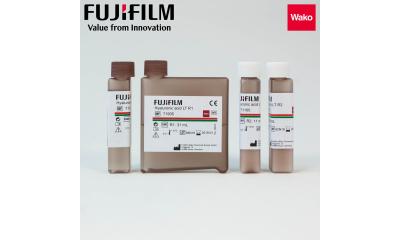
‘The negative predictive value (NPV) of BDG varies across studies depending on the target population, but most studies report a very high NPV – in some cases high enough to support discontinuing empirical antifungal therapy. One important caveat: most published studies use the Fungitell technique, whose analytical principle and reference values differ from those of the Wako-FUJIFILM test. The Wako technique yields levels roughly 15 times lower, and we always specify this in our report.’
Which patient populations do you typically test for β-glucan, and what role does the test play in your diagnostic approach?
‘In daily practice, BDG is mainly prescribed as part of the diagnostic work-up for the two conditions we consider most relevant: deep-seated candidiasis and PCP when BAL cannot be performed. Screening is not routine – the test is generally reserved for selected patients, depending on clinical context and hospital department.
Over the past four years, the long-term coefficient of variation we've observed for this internal control has stayed below 8%. In short: the Wako test is robust, reliable and reproducible
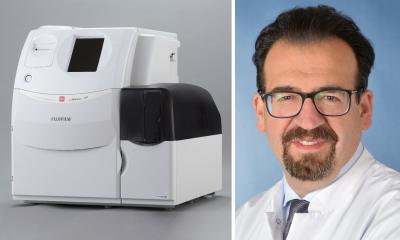
Frédéric Gabriel
‘We mainly perform BDG tests on intensive care patients at high risk of IC, particularly following abdominal surgery, and on patients with implanted devices such as mechanical circulatory support or vascular prostheses. We also use BDG to monitor complex IFIs, notably filamentous IFI following inoculation. Unlike in pneumocystosis, a decline followed by a negative result can, in these cases, indicate a reduction in fungal load. We run the test mainly on serum, occasionally on cerebrospinal fluid, but not on bronchoalveolar lavage samples, since there are too many cross-reactions with environmental or food antigens.’
What are, in your experience, the key strengths of the Wako β-glucan test compared with other available options?
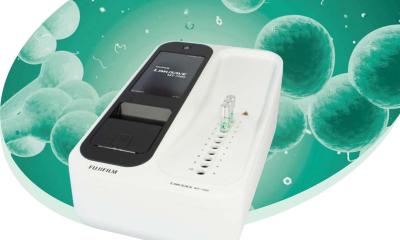
‘The Wako BDG test can be run on demand or in batches, with random access – several batches can be processed at different times – which suits rapid result delivery well. The pre-analytical stage is quick and reliable, and the analyser requires minimal maintenance: annual preventive maintenance and simple monthly cleaning. The instrument, the LIMUSAVE MT-7500, is scalable, with modules available to increase testing capacity from 10 to 30 tests.
‘To verify our analyses are performed correctly, we run the Wako positive control once a week, alongside an in-house quality control sample prepared from a serum pool with a target value close to the decision threshold, around 10 pg/mL. Over the past four years, the long-term coefficient of variation we've observed for this internal control has stayed below 8%. In short: the Wako test is robust, reliable and reproducible.’
How widely is BDG testing used in France, and how do clinicians and microbiologists typically integrate it into their workflows?
‘Given its purpose, BDG testing is mainly prescribed in hospital settings, and its use in France is not uniform. It is well established in the major hospital centres of northern France, where the Fungitell test (Associates of Cape Cod) is used by the vast majority, including for IFI screening in certain laboratories. Its introduction in the south has generally been more recent and perhaps more targeted. Overall, current health policy does not favour widespread rollout of this costly test, so its use needs to remain targeted.’
Does your laboratory use a Laboratory Information System (LIS) to manage and process test results — and if so, how does the Wako β-glucan test fit into that digital workflow?
‘We run most of our tests in small batches, using worklists generated from our laboratory information system (GLIMS, Clinisys). Our tubes carry heat-resistant labels that withstand pre-treatment, so starting the test simply means scanning the tube's barcode on the machine. Because the result depends on gelation time, a positive result is reported faster than a negative one, which takes 90 minutes – a positive BDG result at around 20 pg/mL, for instance, is reported after just 40 minutes of incubation. Since the LIMUSAVE is directly connected to our LIS, results are automatically integrated into GLIMS as soon as the test is complete, and any alerts are relayed through the same connection. Analysis management and biological validation are completely seamless.’
How do you see the role of the Wako β-glucan test evolving over the next few years – and are there clinical scenarios where you would like to see it used more broadly?
‘The ease of use of the Wako BDG test, particularly its ability to perform individual dosing, allows for wider use of the test, bringing it closer to the patients who need it. Invasive candidiasis carries a high mortality rate, which drives extensive use of empirical antifungals in ICU patients. I believe BDG testing can play a real role in helping clinicians discontinue these treatments safely and sooner.’ (WB)
References:
- Alanio A, Hauser PM, Lagrou K, Melchers WJG, Helweg-Larsen J, Matos O, et al. ECIL guidelines for the diagnosis of Pneumocystis jirovecii pneumonia in patients with haematological malignancies and stem cell transplant recipients. *J Antimicrob Chemother.* 2016;71(9). doi:10.1093/jac/dkw156
- Lagrou K, Chen S, Masur H, Viscoli C, Decker CF, Pagano L, et al. Pneumocystis jirovecii Disease: Basis for the Revised EORTC/MSGERC Invasive Fungal Disease Definitions in Individuals Without Human Immunodeficiency Virus. *Clin Infect Dis.* 2021;72(Suppl 2). doi:10.1093/cid/ciaa1805
- Cornely OA, Sprute R, Bassetti M, Chen SCA, Groll AH, Kurzai O, et al. Global guideline for the diagnosis and management of candidiasis: an initiative of the ECMM in cooperation with ISHAM and ASM. *Lancet Infect Dis.* 2025;25(5). doi:10.1016/S1473-3099(24)00749-7
- Donnelly JP, Chen SC, Kauffman CA, Steinbach WJ, Baddley JW, Verweij PE, et al. Revision and Update of the Consensus Definitions of Invasive Fungal Disease From the European Organization for Research and Treatment of Cancer and the Mycoses Study Group Education and Research Consortium. *Clin Infect Dis.* 2019;71(6). doi:10.1093/cid/ciz1008
- Schelenz S, Abdolrasouli A, Armstrong-James D, Ashbee HR, Barton R, Bicanic T, et al. British Society for Medical Mycology best practice recommendations for the diagnosis of serious fungal diseases: 2025 update. *Lancet Infect Dis.* 2025 Nov 10. doi:10.1016/S1473-3099(25)00550-X
- Finkelman MA. Specificity Influences in (1→3)-β-D-Glucan-Supported Diagnosis of Invasive Fungal Disease. *J Fungi.* 2020;7(1). doi:10.3390/jof7010014
11.08.2026