

© Gorodenkoff – stock.adobe.com
Article • From threat to essential ally
Automation, not replacement: the true promise of AI in radiology
Will artificial intelligence (AI) render radiologists obsolete? What seemed a likely scenario only nine years ago, has now given way to a quite different reality: At RSNA 2025, two experts outlined how AI tools are becoming essential allies – not replacements – for radiologists facing an unprecedented workforce crisis.
Special Report: Cynthia E. Keen
In 2016, Geoffrey Hinton, PhD, Nobel Laureate and widely known as “the godfather of AI”, told radiologists attending the RSNA Annual Meeting that their jobs would soon be obsolete, replaced by artificial intelligence. Nine years later, radiologists still dominate reading rooms, although AI tools have entered them. The dynamic, however, has changed. AI tools are now desperately needed to aid, rather than to replace, radiologists.
How did this happen? Nancy Pham, MD, Assistant Professor of Radiology in neuroimaging and neurointervention at Stanford Medicine, offered: “A large and unsustainable imaging volume is outpacing the global baseline radiologist supply.” Speaking in a scientific session presentation at RSNA 2025 on AI’s expanding role in image interpretation, she outlined how increasingly heavy workloads and an ageing population of radiologists are driving rising turnover – radiologists leaving their positions or departing the profession entirely – with rates in the United States climbing from 5.3% in 2013 to 8.5% in 2022.1 In Europe, the situation is similarly bleak, with approximately 19% of radiologists retiring within five years.2
Three types of AI in clinical use
Dr Pham explained that AI, used intelligently, can help minimize an impending crisis of too many diagnostic imaging exams and not enough radiologists to read them. She identified three viable applications:
- Autonomous AI makes clinical decisions without human oversight – making it closest to the type of AI Prof. Hinton was referencing in 2016. Currently, two such products are in clinical use: LumineticsCore, the sole FDA-cleared autonomous AI product, detects moderate-to-severe diabetic retinopathy, and either refers a patient to an eye care professional or advises that a repeat exam should be performed in 12 months. CE-marked Oxipit ChestLink reduces workload by identifying normal chest radiographs with 99.9% precision, allowing radiologists to focus exclusively on complex or abnormal cases.
- Generative AI interprets free-text notes, laboratory results, vital signs, and a variety of reports. Dr Pham advised that she uses a generative AI tool at Stanford Medicine when a patient has a very complex and lengthy history. This tool rapidly generates well organized, detailed lists and prepares preliminary notes.
- Augmented, or Assistive, AI serves as a co-pilot and enhances human decision-making. These AI tools handle non-interpretive and tedious tasks such as segmentation, volume measurement, and lesion tracking. Another application is to serve as a second reader acting as a safety net to reduce false positives and negatives. Breast imaging currently offers the strongest evidence of the benefits of AI as a second reader.
‘Noncontrast head CT scans are one of the highest volume exams ordered by emergency department physicians. Often performed daily for minor trauma, headache, or dizziness, the vast majority of these CT exams are normal,’ Dr Pham observed. An AI tool screening normal studies would free radiologists to focus on challenging cases and those with abnormal findings. ‘However,’ she cautioned, ‘the safety bars for such a tool are incredibly high. The brain is unforgiving.’
Tomorrow's highly automated reading room
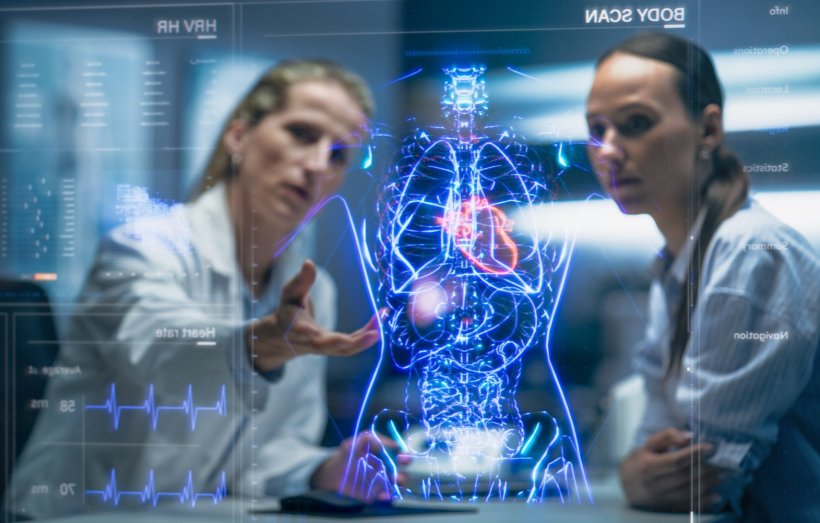
Tara Retson, MD, PhD, Deputy Chief of AI in Breast Imaging at UC San Diego Health, predicted that reading rooms will soon become highly automated. Multiple image-specific AI tools will integrate with PACS and electronic medical records, extracting information in seconds and generating summaries of prior studies.
AI fails in ways that we don’t expect
Tara Retson
Radiologists will have a wealth of information at their fingertips in seconds, she said. 'Real time alerts, triage, and prioritisation of unread exams is happening now. AI tools are advising which physicians need to be contacted immediately, what follow-up is needed, and whether it occurs. AI will standardize BI-RADS reports, do real-time coding, and embed guidelines into reports.’ AI tools may also perform control functions, such as performing drift monitoring tasks and audits for transparency.
‘I believe that the biggest impact AI will have will be automating tasks, not performing activities that will replace radiologists,’ Dr Retson emphasized. ‘AI tools will promote patient centered care, empower radiologists to focus on complex imaging and cases by liberating them from tedious, time-consuming tasks, and improve workflow efficiency.’
However, vigilance remains crucial: ‘Human oversight is essential. AI must balance key concepts to augment clinical care. AI tools must be subjected to rigorous quality control. AI fails in ways that we don’t expect. No system is perfect. AI hallucinations are real,’ she warned.
Profiles:
Nancy Pham, MD, is an Assistant Professor of Radiology in neuroimaging and neurointervention at Stanford Medicine in Stanford, CA.
Tara Retson, MD, PhD, is an Assistant Professor of Radiology at UC San Diego Health. Her research focuses on deep learning applications in medical imaging.
References:
- Parikh JR, Drake AR, Rula EY, et al. “Radiologist Turnover in the United States.” J Am Coll Radiol. 2026 Feb 25:S1546-1440(26)00031-1.
- Brady AP, Paulo G, Brkljacic B, et. al. “Current status of radiologist staffing, education and training in the 27 EU Member States.” Insights Imaging. 2025 Mar 15;16:59.
02.07.2026