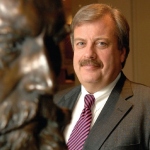
The increasing value of Medica worldwide
A statement by Jochen Franke, CEO of Philips Healthcare Germany, Austria and Switzerlandand, Head of the Advisory Council at MEDICA 2010.



A statement by Jochen Franke, CEO of Philips Healthcare Germany, Austria and Switzerlandand, Head of the Advisory Council at MEDICA 2010.

Visiting an exhibition is exhausting enough – having luggage or a briefcase stolen is even worse. Opportunity makes the thief – and Medica is a great opportunity! With more than 130,000 people moving through narrow walkways some can become easy prey to thieves. The Düsseldorf police are advising visitors and exhibitors on safety: ‘Protect what is near and dear!’

Held every three years, a very important healthcare IT event is to be held in Europe after a gap of 14 years. From November 15-19, healthcare managers and suppliers from 37 countries will arrive in Milan to discuss the future of world’s electronic health services at the 16th Congress of IFHRO (International Federation of Health Records Organisations), held in collaboration with the WHO.
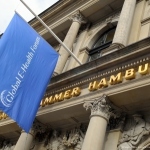
Approx. 250 delegates from more than 30 countries followed the invitation to the inaugural Global E-Health Forum on October 25 + 26, 2010 in Hamburg. In presentations, workshops and discussion forums, the attendees learned about e-health strategies, solutions and services from all over the world.
An RFID transponder (also known as a tag) consists of a chip and tiny antenna. Thanks to their small size these transponders can be integrated into almost any object, including clothing, boxes or even sheets of paper. Thus the logistics industry numbers amongst the prolific areas of application for wireless frequency identification using RFID (radio frequency identification) technology.

In a European Hospital interview Professor Herman Requardt, Head of Corporate Technology and CEO of Siemens Healthcare Sector, offered his views on current and future healthcare manufacturing needs as well as the market challenge arising from the dynamic economic ascent of other nations.
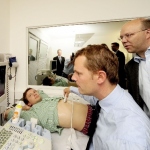
At first glance everything looks real, from the equipment and fittings to gleaming white bed sheets and the pallor of the patient. But something is incongruous: a large mirror opposite the bed is reminiscent of a police interview room. It is the sole suggestion that this hospital room may be unusual. It is. Behind the mirrored glass, medical students indiand a tutor are observing a ‘doctor’…

EIZO GmbH, Display Technologies and Ondal Industrietechnik GmbH announce their partnership to provide monitor carrying systems, monitors and accessories as system solutions. These are suitable to use in interventional radiology as well as in standard and hybrid operating rooms.
Given that European countries have very diverse healthcare systems with special types of hospitals and even special information systems, comparison of healthcare systems and hospital performances is difficult. Thus, the first HIMSS Europe Leadership IT Summit, which took place in Rome, has provided a platform from which to discuss quality patient care based on IT and particularly the…
Facing the risk of an invasion by big international operations, French medical laboratories drew inspiration for their defence from a national hero - Asterix. While the newly launched reform of the French laboratory system will bring the traditionally independent medical labs into conformance with international quality standards, the law builds an elaborate defence against foreign operators to…
Clear transparency of the flow of products and information in hospitals not only results in increased patient safety but also, because the documentation of treatments and recording of products used ensures compliance with legal requirements. The ability to retrace all steps is also an economic asset in terms of comprehensive cost control over product consumption.
How to finance the healthcare system? It’s an ongoing dilemma, particularly for in-patient care. According to a German Hospital Federation (DKG) estimate, the country’s hospitals currently suffer an investment backlog of €30-50 billion.
Today, healthcare professions make up ten percent Europe’s workforce. The EU Commission calculates dramatic shortages in healthcare provision in the next decade unless countermeasures are taken now. Thus, at this year’s European Health Forum Gastein (EHFG), held in October in Bad Hofgastein, Austria, international experts discussed ways to make health employment more attractive.

The strategies used to assess the environmental risks posed by pharmaceuticals are not enough to protect natural microbial communities, reveals a researcher from the University of Gothenburg, Sweden, who is calling for better environmental risk assessments.
On behalf of Euroconvention, we are glad to announce that we have only a few last places left for speaker/sponsor, exhibitor and delegates places at this timely and high-level event, the MENA Healthcare Infrastructure Investment & Finance Summit, taking place October 27-28, 2010 in Cairo, at the Hotel Concorde El Salam.
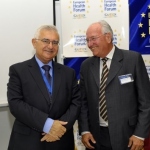
EU Commissioner for Health and Consumer Policy, John Dalli, presented some of his key health priorities today at the 13th European Health Forum Gastein (EHFG). Among the important topics on his agenda: prevention, in particular in the field of tobacco control; an appropriate framework for cross-border healthcare; and innovation in the field of active and healthy ageing.
Health as a job creator: Health professions make up one of the largest segments in the overall European labor market, accounting for ten percent of the total workforce. The EU Commission calculates dramatic shortages in health care provision in the next decade unless countermeasures are taken now. Experts at the European Health Forum Gastein discussed how health jobs can be made more attractive.
HEID or Health in Europe: Information and Data Interface is designed as a wikipedia for health and – at the moment in the test and pilot phase – enables everybody to find comparable European Health information and data free for use. Set up by the European Commission, DG Health and Consumers, the content is updated on voluntary basis by experts and health authorities, agencies and…

The reprocessing of single use medical devices is well-established in Europe. However, questions about the risk for patients and users arise constantly. The European Commission presented recently a kind of risk survey. The report strikes German experts as basically accurate but unbalanced.
A new report launched today in the European Parliament shows inefficiencies in the treatment of chronic pain result in increasing healthcare costs and prolonged patient suffering.[1] Chronic pain costs Europe billions of Euros every year, with national costs ranging from €1.1 billion to nearly €50 billion.2,3 21% of Europeans with chronic pain are unable to work at all as a result of their…
Expert knowledge in health policy from the EU is in demand outside the Union. The European Health Forum Gastein is a vital hub for the future development of European health policy. This year’s Forum will be the thirteenth so far and will be held from October 6 to 9 in Bad Hofgastein, Austria. For the first time, high-ranking health policy-makers from the Balkan countries and CIS countries will…

Facing billion-euro deficits, European healthcare systems are putting hospital operations under the microscope to find areas where costs can be slashed dramatically, reports John Brosky.

The Global E-Health Forum, which will take place on October 25-26, 2010, in Hamburg, Germany, will address the main challenges healthcare systems all over the world are facing: demographic shifts, the impact of globalization and an increased burden of chronic diseases and expensive treatments.
A Government White Paper on healthcare reform has caused Unison, Britain’s biggest public sector trade union (over 1.3 million members), to launch legal action against the Government ‘as a matter of urgency’. The day after the paper was presented in July, NHS CEOs were instructed by NHS CEO Sir David Nicholson to implement the proposals ‘immediately’ - without being given time to…
The aim of the predictive modelling systems being trialled in the UK are to identify which people in a given population are the most likely to be admitted to hospital in the next 12 months and then focus preventive measures on them to try to avoid hospital admission. Primary Care Trusts (PCTs), which commission hospital services in the UK, are favouring the model as they try to cut costs during a…