

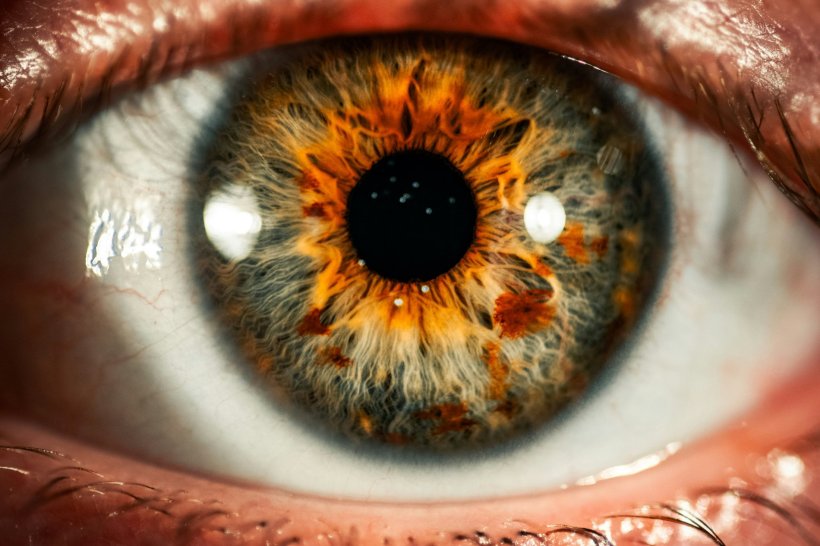
© Colin Lloyd – unsplash.com
News • Late light-off response
13-second eye test shines light on recovery after severe brain injury
Study finds late light-off response may provide clues about the brain’s potential for recovery
A simple bedside eye test may help predict recovery of consciousness in patients with severe brain injuries, according to new research presented at the European Academy of Neurology (EAN) Congress 2026.1
The study found that a previously overlooked phase of the pupil response to light, known as the late light-off response (LOR), predicted improvements in consciousness seven days later in patients with acute brain injury. In contrast, standard pupil measurements already widely used in intensive care units (ICUs), including the Neurological Pupil Index (NPi) and pupillary light reflex (PLR) latency, did not predict later gains in consciousness.
The entire assessment takes only 13 seconds per eye, making it a fast and practical bedside tool that could potentially be integrated into routine ICU care
Poul Laigaard
Predicting whether a patient will recover consciousness after a severe brain injury remains one of the greatest challenges in intensive care.2 While automated pupillometry is already widely used in ICUs to assess brain function, existing measures mainly capture the pupil’s immediate reaction to light and offer limited insight into longer-term recovery.
Researchers from Copenhagen University Hospital Rigshospitalet and the Danish Technical University investigated whether a later phase of the pupil response, occurring after the eye reacts to light, could provide additional insight into recovery potential in patients with acute disorders of consciousness. The study included 250 patients with impaired consciousness following traumatic and non-traumatic brain injury, alongside 30 age- and sex-matched healthy controls. Patients underwent daily automated pupillometry and neurological assessments for up to 20 days in the ICU.
The research found that late LOR latency independently predicted improvement in consciousness seven days later, even after accounting for baseline neurological status, time since injury, sedation and injury type. Notably, the measure was not associated with patients’ level of responsiveness on the same day, suggesting it may reveal recovery potential not apparent during routine bedside assessment.
Dr Poul Laigaard, lead author from Copenhagen University Hospital Rigshospitalet, commented, “Current tests of pupillary function tell us how the brain is responding in the moment, but the late light-off response may provide clues about the brain’s potential for recovery. This could help us better understand which patients may improve in the days ahead.”
The relationship appeared strongest in patients who were not receiving sedative medication and in those with anoxic–ischaemic brain injury, a condition in which the brain is deprived of oxygen and blood flow.3 However, researchers caution that these subgroup findings were exploratory and require confirmation in larger studies.
Professor Daniel Kondziella, senior author of the study, added, “We believe this is an important observation that deserves further investigation. Larger, multicentre studies are needed to determine whether this approach could be used routinely for bedside monitoring and prognosis.”
Because the technology required is already available in many ICUs, Dr Laigaard explained the approach could be relatively easy to implement if validated in future studies. “The light-off response is measured using a handheld automated pupillometer in much the same way as current pupil measurements. The entire assessment takes only 13 seconds per eye, making it a fast and practical bedside tool that could potentially be integrated into routine ICU care.”
References:
- Laigaard, P., Stückler, S., Eigenbrodt, A. et al. (2026). Pupillary light-off latency predicts 7-day improvement in consciousness in patients with acute disorders of consciousness. Abstract A-26-17842. Presented at the 12th EAN Congress (Geneva, Switzerland).
- Edlow, B.L., Claassen, J., Schiff, N.D., Greer, D.M. (2021). Recovery from disorders of consciousness: mechanisms, prognosis and emerging therapies. Nature Reviews Neurology; 17(3):135–156.
- Messina, Z., Shapshak, A.H., Mills, R. (2023). Anoxic Encephalopathy. StatPearls. NCBI.
Source: Beyond
28.06.2026