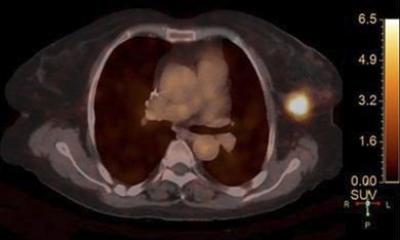


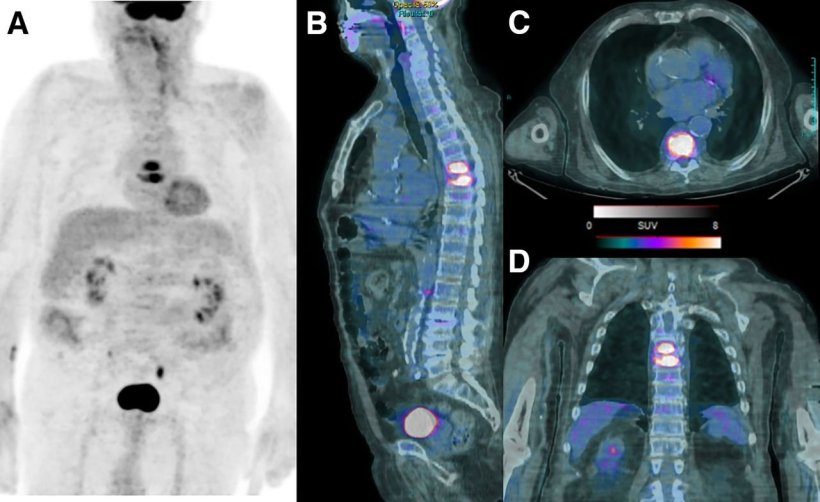
Image source: Society of Nuclear Medicine and Molecular Imaging; from: Albano D, Lanfranchi F, Bauckneht M et al., Journal of Nuclear Medicine 2026
News • Molecular imaging
Fever of unknown origin: PET/CT enhances diagnosis
Study identifies new biomarker and patient selection parameters
PET/CT can add valuable information to aid the diagnosis of fever of unknown origin (FUO), according to a new multicenter, retrospective study published in the Journal of Nuclear Medicine. In a cohort of more than 900 FUO patients, molecular imaging directly influenced the clinical management in nearly 75%, contributing to improved patient outcomes, increased patient safety, and reduced healthcare costs.
18F-FDG PET/CT has demonstrated significant diagnostic utility in the evaluation of several inflammatory and infectious diseases
Domenico Albano
FUO presents a significant diagnostic challenge because of its wide range of potential causes. Currently, there is no diagnostic gold standard for FUO evaluation, and investigations are typically tailored to each patient’s characteristics and clinical features. The cornerstone of diagnosis is a comprehensive history, physical examination, and first-line testing. Advanced imaging techniques, such as PET/CT, are utilized for second-line testing.
“Although predominantly used in oncology, 18F-FDG PET/CT has demonstrated significant diagnostic utility in the evaluation of several inflammatory and infectious diseases. Its application in FUO is increasing, although its diagnostic value remains debated,” said Domenico Albano, MD, nuclear medicine physician at the Università degli Studi of Brescia and ASST Spedali Civili di Brescia, Italy. “In this study, we sought to investigate the diagnostic performance and the clinical impact of 18F-FDG PET/CT on the management of patients with FUO.”
The study included 929 patients from 12 centers who underwent 18F-FDG PET/CT for FUO. The final diagnosis (infectious disease, noninfectious inflammatory disease, malignancy, or unknown cause) for each patient was established on the basis of laboratory, imaging, histopathologic or pathologic examinations, and at least six months of clinical follow-up data. Researchers then evaluated the role that 18F-FDG PET/CT played in diagnosis and clinical management, as well as its association with clinical, epidemiologic, and biochemical parameters.
18F-FDG PET/CT scans had positive results for 549 patients and negative results for the remaining 380 patients. Researchers found that PET/CT directly influenced the clinical management—introduction of new therapies, modulation of previous treatment, or recommendation of specific invasive procedures—in approximately 75% of patients. In addition, the study identified several predictive markers for a positive PET/CT scan: high C-reactive protein, high neutrophil-to-lymphocyte ratio, the presence of fever at the time of PET, and short duration of prior antibiotic therapy.
“Based on these findings, 18F-FDG PET/CT has the potential to be a first-line tool in the work-up of FUO, rather than a second- or third-line test,” said Albano. “In addition, the integration of clinical and biochemical parameters may help improve performance of 18F-FDG PET/CT, reducing the time to diagnosis and preventing unnecessary treatments and investigations.”
Source: Society of Nuclear Medicine and Molecular Imaging
31.07.2026