

Image source: NTU
News • After-effects of implantation
Drug-releasing electrode preserves hearing after cochlear implant surgery
A flexible, porous parylene electrode delivers anti-inflammatory steroids directly into the inner ear, reducing surgical trauma.
Cochlear implants are life-changing biomedical devices that restore sound perception for individuals with severe to profound hearing loss. However, the surgical insertion of standard electrodes into the delicate inner ear often triggers acute inflammation, tissue scarring, and secondary damage to remaining sensory hair cells and auditory neurons. This trauma can compromise electrical stimulation efficiency and lead to the irreversible loss of residual hearing.
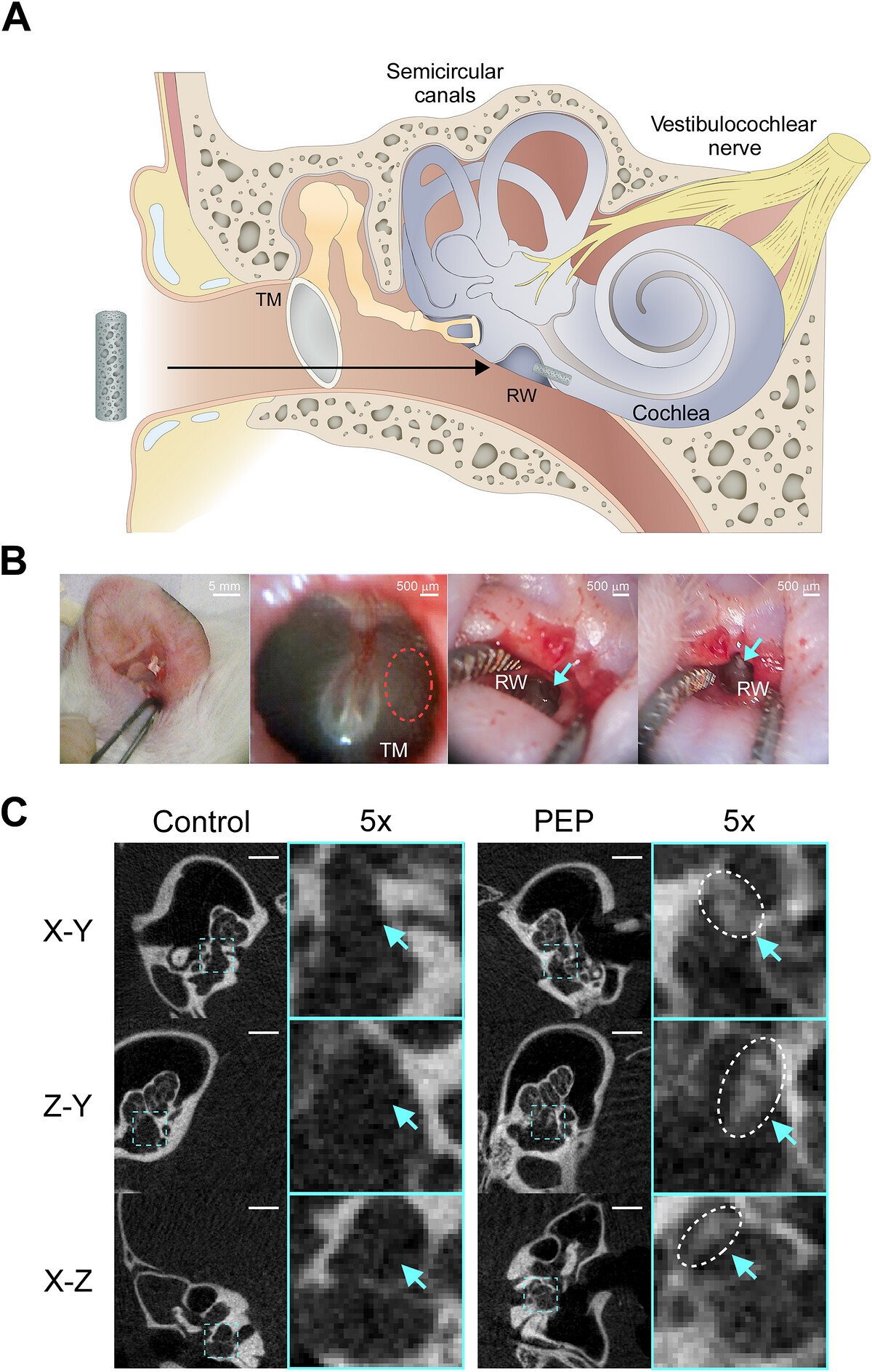
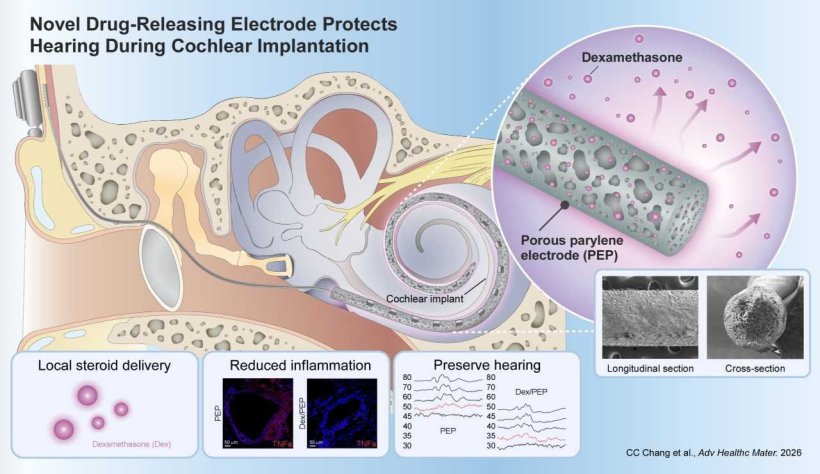
Image source: Chang CC, Lu YC, Chang YM et al., Advanced Healthcare Materials 2026 (CC BY 4.0)
To tackle this long-standing clinical challenge, an interdisciplinary research team from National Taiwan University (NTU) and National Taiwan University Hospital designed an innovative, highly porous parylene-based electrode prototype capable of targeted drug delivery.
Unlike conventional silicone carriers that possess low surface areas and limit drug-loading capacity, the new electrode features an interconnected micro-porous network fabricated through an advanced vapor sublimation and deposition process. The study is published in Advanced Healthcare Materials.
The porous matrix was loaded with the corticosteroid dexamethasone to achieve localized, sustained pharmacological protection. In preclinical models, the drug-loaded electrode effectively reduced foreign-body responses, suppressed key inflammatory cytokines such as TNF-α, and significantly improved auditory brainstem response thresholds compared to non-drug controls at both one and four weeks post-surgery. The flexible material demonstrated excellent biocompatibility, seamlessly conforming to the inner ear's spiral architecture without causing structural damage. "Our in vivo findings clearly demonstrated that the localized release of dexamethasone suppresses acute inflammation and prevents secondary tissue damage, providing crucial protection during the most vulnerable post-implantation window," says lead author Chi-Chieh Chang of NTU Hospital's Department of Otolaryngology-Head and Neck Surgery.
"Our vapor-based fabrication creates an interconnected porous scaffold with exceptional flexibility and stability, providing an ideal platform for delivering therapeutics directly where they are needed most," says co-corresponding author Prof. Hsien-Yeh Chen of NTU's Department of Chemical Engineering.
"By combining pharmacological protection with neural stimulation, this multifunctional electrode platform represents a crucial step forward in preserving residual hearing and maximizing communication outcomes for cochlear implant recipients," says Prof. Chen-Chi Wu of NTU Hospital's Department of Otolaryngology-Head and Neck Surgery and co-corresponding author of the study.
Source: National Taiwan University
28.09.2026