

Photo: Jeroen Kuit
Sponsored • Breast imaging
Finding what the mammogram misses
From population-based mammography screening to more nuanced, risk-adapted models: Emerging technologies, among them contrast-enhanced mammography and contrast-enhanced MRI, as well as next-generation contrast agents, are opening new paths for breast imaging. During the annual scientific meeting of the European Society of Breast Imaging (EUSOBI) in Maastricht, we spoke with Dr. Joana Reis, Medical Affairs Breast Imaging Solutions Lead for Radiology at Bayer, about where the field stands and where it is heading.
Interview: Wolfgang Behrends
HiE: Before you joined Bayer, you trained and worked as a breast radiologist in Oslo. How does that clinical experience shape the way you approach your current work?
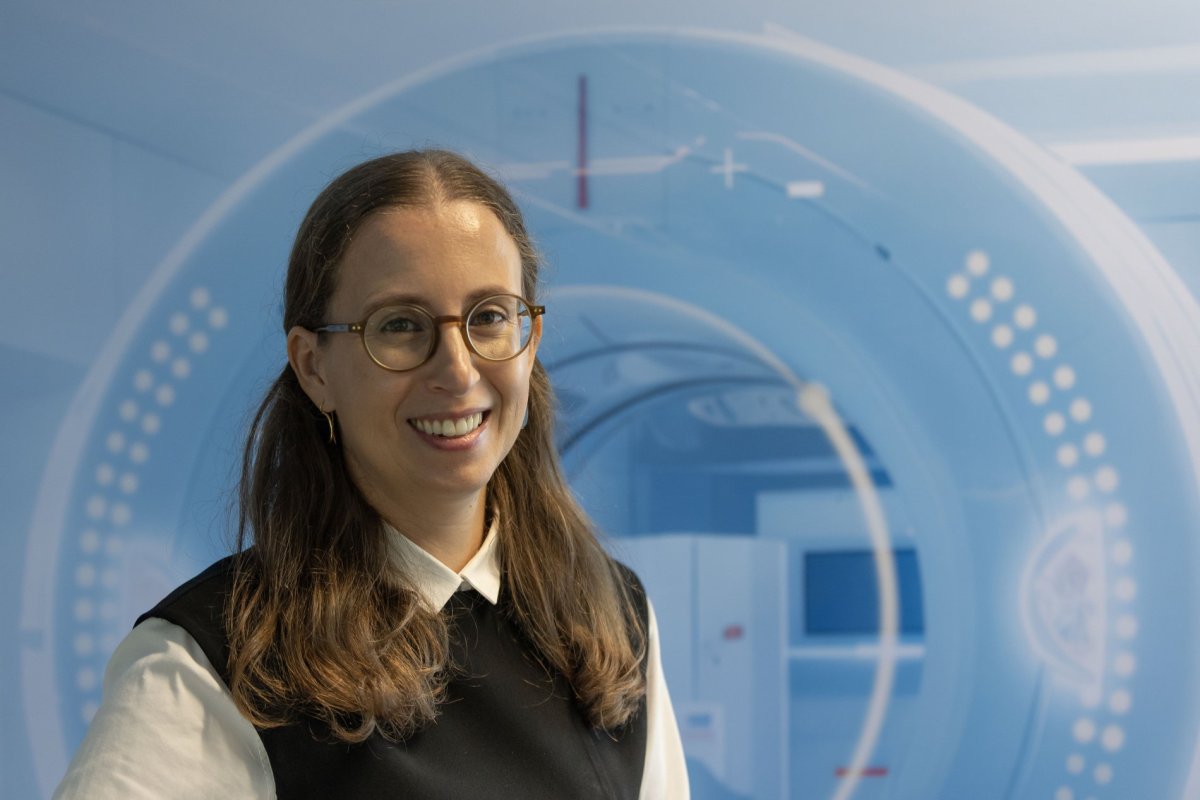
Photo: Jeroen Kuit
Dr. Joana Reis: ‘When I was in clinical practice, my perspective was very individual. I had direct access to unmet needs, but they were specific to one patient at a time. If a patient needed a supplemental imaging modality, I would try to find a solution for that one person. Working in medical affairs in a global role, I encounter the same unmet needs – but I try to tackle them from a completely different angle: What is still needed to support the broader adoption of contrast-enhanced mammography into clinical practice guidelines, alongside breast MRI? How can they be included in reimbursement decisions? I'm still working from a patient-centred perspective, but instead of going case by case, I'm working from backstage, at a broader level. The clinical experience gives me the grounding – it ensures that everything we do is linked to a genuine unmet need.’
You mention unmet needs – can you give a concrete example of where standard imaging falls short, and what new modalities can offer?
‘Dense breast tissue is a good example of an unmet need. Breast density is a mammographic imaging finding, and mammography remains the gold standard for assessing it. However, as breast density increases, the sensitivity of mammography decreases because both dense tissue and many breast lesions appear white on the mammogram. This can make a tumour more difficult to detect, as it may be masked by the surrounding dense tissue. In addition, high breast density is itself an independent risk factor for breast cancer.
Contrast-enhanced imaging can improve lesion conspicuity by highlighting areas of tumour enhancement that may not be visible, or may be more difficult to detect, on conventional mammography
Joana Reis
‘This is where supplemental imaging modalities can provide additional value, particularly for women with dense breasts. Contrast-enhanced imaging can improve lesion conspicuity by highlighting areas of tumour enhancement that may not be visible, or may be more difficult to detect, on conventional mammography.
‘Today, two important contrast-enhanced approaches are contrast-enhanced breast MRI and contrast-enhanced mammography. By using contrast, both modalities can make breast lesions more conspicuous and potentially improve cancer detection in women where conventional mammography has limitations.’
Breast imaging has traditionally been dominated by population-based mammography screening. Are we moving away from that model?
‘Mammography remains the gold standard for breast cancer screening, and it plays a fundamental role in early detection. However, we are shifting away from the one-size-fits-all approach towards a personalised, risk-adapted model. So, instead of offering the same mammographic screening approach to every woman of the same age, the goal is to identify women who belong to different risk categories – based, for example, on breast density, personal history, or previous radiation exposure – and to offer imaging pathways that are appropriate to their individual risk profile.
‘For women with extremely dense breasts, EUSOBI recommends supplemental breast MRI screening – every two to three years. Where MRI is not available, we can also offer contrast-enhanced mammography. If neither of those modalities is available, the use of ultrasound is advised. So, we are moving beyond a purely population-based approach to screening towards a more individualized strategy, where the imaging pathway is increasingly informed by a woman’s individual risk profile. The national screening programmes across Europe are also beginning to reflect this shift, although the pace varies from country to country.’
Recommended article
Article • Research, diagnostics, treatments
Focus on breast cancer
Breast cancer (breast carcinoma; often abbreviated as BRCA) is the most common cancer in women in many countries and the cancer with the highest mortality rate. The diagnostic and therapeutic options for breast cancer are correspondingly diverse. Keep reading for latest developments in early detection, staging, treatment and research.
What role do you think imaging will play in the future of breast cancer care, beyond screening?
‘Breast imaging now offers what I would call an end-to-end solution across the patient care pathway. We detect and diagnose disease, characterise lesions, guide biopsies – both with MRI and with contrast-enhanced mammography – and contribute to treatment planning, staging, and monitoring. That is a significant evolution from where breast imaging was only a decade ago, when it was viewed primarily as a screening tool.’
Looking ahead, what are the most significant developments on the horizon for breast imaging?
‘AI is still a hot topic and is becoming an increasing part of the radiology landscape. Another important topic is the development of next-generation MRI contrast agents, which is a focus of Bayer. Our new low-dose, high-relaxivity contrast agent gadoquatrane has seen first market approvals in 2026, with more to come in the next months and years.
It's not only about women understanding that they have dense breasts – but also about understanding that supplemental imaging can help detect breast cancer earlier
Joana Reis
‘Beyond technology, education and awareness are major goals for me – not only as a physician, but also in my role working in industry. Knowledge is power. It's not only about women understanding that they have dense breasts – and what this means in terms of breast cancer risk – but also about understanding that supplemental imaging can help detect breast cancer earlier. This is why our continued collaborations with scientific societies like EUSOBI are very important for us. Ultimately, it is about ensuring that women have access to the right imaging modality, at the right time, based on their individual risk and clinical needs.’
Profile:
Dr. Joana Reis has been Senior Director, Global Medical Affairs Breast Imaging Solutions Lead for Radiology at Bayer since 2025. Previously, she held several roles in medical imaging, including Medical Affairs Lead for Digital Radiology, where she developed medical strategies focused on the application of artificial intelligence in imaging. Before joining Bayer, Dr. Reis worked as a Senior Consultant Breast Radiologist at Akershus University Hospital and holds a PhD in Breast MRI from the University of Oslo, Norway.
15.10.2026
- breast cancer (645)
- breast imaging (129)
- contrast agents (146)
- mammography (261)
- MRI (855)
- women's health (362)