

Image source: NTU; adapted from: Chang KH, Lin WL, Chen TC, Yu J, Advanced Healthcare Materials 2026 (CC BY-NC-ND 4.0)
News • Sustained retinal neuroprotection
Injectable hydrogel promotes visual recovery after optic nerve injury
Researchers from National Taiwan University (NTU) and National Taiwan University Hospital (NTUH) have developed an injectable antioxidant hydrogel that protects retinal neurons and promotes visual recovery following acute optic nerve injury.
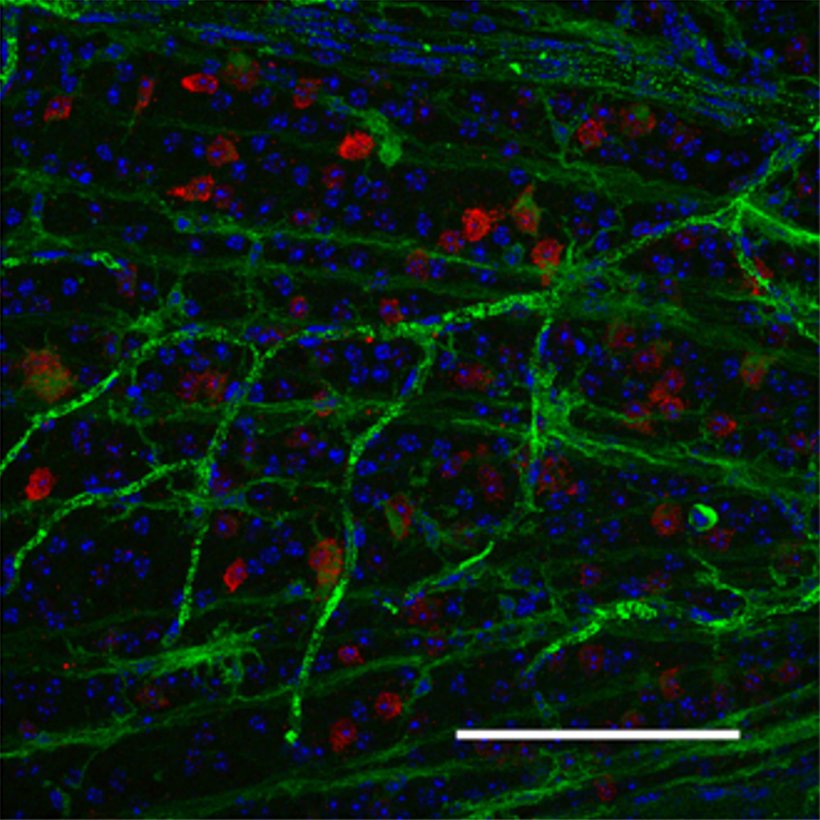
Oxidative stress and neuroinflammation are major contributors to retinal ganglion cell (RGC) degeneration after optic nerve injury, yet effective treatments remain limited. To address this challenge, the research team developed a catechol-functionalized carboxymethyl cellulose hydrogel (CMCDA) as a multifunctional platform for localized and sustained retinal neuroprotection. The study is published in Advanced Healthcare Materials.
Designed for minimally invasive intravitreal injection, CMCDA integrates antioxidant, tissue-adhesive, self-healing, and biodegradable properties within a single cellulose-based hydrogel. In a mouse optic nerve crush model, the researchers found that a single administration of CMCDA reduced oxidative stress and neuroinflammation, preserved RGCs, and promoted neuronal and axonal repair.
The findings highlight the potential of this multifunctional cellulose-based hydrogel as a minimally invasive therapeutic strategy for acute optic nerve injury and oxidative stress-associated retinal neurodegeneration
Jiashing Yu
“Using single-cell RNA sequencing, the team further demonstrated that CMCDA reshaped the retinal microenvironment after injury, suppressing pathways associated with oxidative stress, apoptosis, inflammation, and gliosis while promoting protective and regenerative responses. Importantly, these cellular and molecular improvements translated into measurable recovery of visual function,” says co-corresponding author Dr. Ta-Ching Chen, associate professor of ophthalmology.
“The findings highlight the potential of this multifunctional cellulose-based hydrogel as a minimally invasive therapeutic strategy for acute optic nerve injury and oxidative stress-associated retinal neurodegeneration,” says Dr. Jiashing Yu, professor of chemical engineering and co-corresponding author of the study.
Source: National Taiwan University
26.08.2026