
© Viacheslav Yakobchuk – stock.adobe.com
News • Language barriers and culture clash
Addressing healthcare challenges for Ukrainian refugees
Several Ukrainian refugees have sought alternative medical care and received medication from their home country despite getting rapid access to the Danish healthcare system. There is a risk that frustrated patients fall through the cracks, researchers point out.
The war in Ukraine has displaced millions of Ukrainians across Europe, and in Denmark a special law has granted approximately 48,000 refugees residence permits – including free access to the Danish healthcare system. However, access on paper does not necessarily equal access in practice. For some Ukrainians, their encounter with the system has been challenging, marked by frustrations, language barriers, and a sense of rejection or indifference from their general practitioner. Several have also sought alternative help outside the system and in their home country.
This is highlighted in two new studies that, for the first time, describe a group of Ukrainian refugees’ early experiences with the Danish healthcare system. The studies were published in the Scandinavian Journal of Public Health and in Social Science & Medicine.
There are many aspects that can be difficult to understand if you come from a system with a more holistic approach to visiting a doctor, undergoing examinations, and accessing specialists without going through a GP
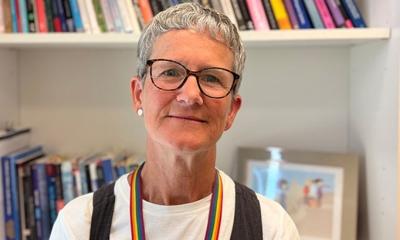
Maria Marti Castaner
“It is surprising, because extra efforts were made specifically for Ukrainian refugees. Nevertheless, we see that many have found it difficult to navigate the system and obtain the help they need,” says Marie Nørredam, Professor at the Department of Public Health at the University of Copenhagen and co-author of both studies.
The studies are based on a questionnaire survey of 540 Ukrainian refugees in the Greater Copenhagen area and a smaller series of interviews. The survey is not representative of all Ukrainian refugees in Denmark but describes a phenomenon, the researchers emphasize.
The material was collected from May to October 2023 – for most participants more than a year after their arrival in Denmark. In the questionnaire survey, only 17% report that they feel well informed about the Danish healthcare system, and one third (36%) say they have needed medical treatment without receiving it over the past year.
The interviews provide researchers with insight into why frustration with the Danish system arises. “Several describe their encounters with their general practitioner as frustrating. Short consultations, a focus on one issue at a time, and reluctance to prescribe certain types of medication were, in some cases, perceived as rejection or indifference,” says Maria Marti Castaner, Associate Professor at the Department of Public Health and co-author of the studies.
Overall, the challenges reflect a culture clash between Danish and Ukrainian approaches, the researchers point out. “There is a fundamental difference in how the healthcare system functions in Denmark and in Ukraine. Frustrations arise when there is a mismatch between their expectations of the healthcare system and the reality they encountered,” says Maria Marti Castaner. She adds: “In Denmark, we have a gatekeeper model where the general practitioner must screen and prioritize. There are many aspects that can be difficult to understand if you come from a system with a more holistic approach to visiting a doctor, undergoing examinations, and accessing specialists without going through a GP.”
There is also the language challenge: Among respondents, 25% had a professional interpreter present at their most recent GP visit, while others used Google Translate (27%) or received help from friends or family (24%). “Language can be a barrier for many Ukrainians, who often do not speak Danish or English – both when contacting the doctor and during the consultation itself. It may therefore be easier to rely on networks or systems they are familiar with,” says Marie Nørredam.
The studies do not examine whether there is a direct causal link, but the researchers estimate that the culture clash and language barriers likely explain why several Ukrainian refugees have sought alternative solutions outside the Danish healthcare system. “Several Ukrainian refugees describe receiving medication across borders, while some seek out Ukrainian doctors in Denmark or travel to Ukraine for treatment,” says Marie Nørredam.
37% of respondents had been in contact with a Ukrainian doctor. 72% had received medication from Ukraine. According to the researchers, possible reasons also include differences in medication prices and in which medicines are available without a prescription. However, these alternative strategies may pose risks to health and can possibly lead to fragmented treatment. “It can be problematic if patients with chronic conditions are not followed up within the Danish system. They risk not receiving the care they need, which may worsen physical or mental illness, or we may only encounter them when they fall completely through the cracks,” says Marie Nørredam.
The researchers highlight several measures that could make it easier in the future for Ukrainian – and other – refugees to navigate the Danish healthcare system and prevent the system from only intervening too late in a course of illness. “First and foremost, it is about improving how newly arrived refugees are properly informed about the Danish healthcare system. Ukrainian refugees tell us that when the reasoning behind our system is explained, it reduces some of their frustrations and builds trust. When the doctor spent more time and adopted a more holistic approach, that also helped build trust,” says Maria Marti Castaner.
“It is also extremely important to ensure resources and knowledge are allocated where responsibility is placed – in this case with general practitioners – otherwise it becomes too difficult to carry out the task in practice. And when we see that language is a barrier for many Ukrainians, there is also a need for more qualified interpreters in the healthcare system,” says Marie Nørredam.
While the two studies examine Ukrainian refugees’ encounters with the Danish healthcare system, the issues are not unlike those faced by other refugee groups. “We see many of the same challenges among refugees coming to Denmark from other countries who must navigate our healthcare system without knowing the language. Therefore, efforts in these areas would also benefit other refugee groups and people migrating to Denmark in general,” says Maria Marti Castaner.
Source: University of Copenhagen
07.07.2026