
© Pickoloh – stock.adobe.com
Article • Digital health management
Europe’s journey towards the single patient record
National health systems across Europe are making the single patient record (SPR) a reality – centralising all healthcare data on one platform to improve care and empower patients. At the HETT Show in London, Brian Murray outlined how countries including Greece, Slovenia, Malta, Ireland and the UK are embracing this digital transformation.
By Mark Nicholls
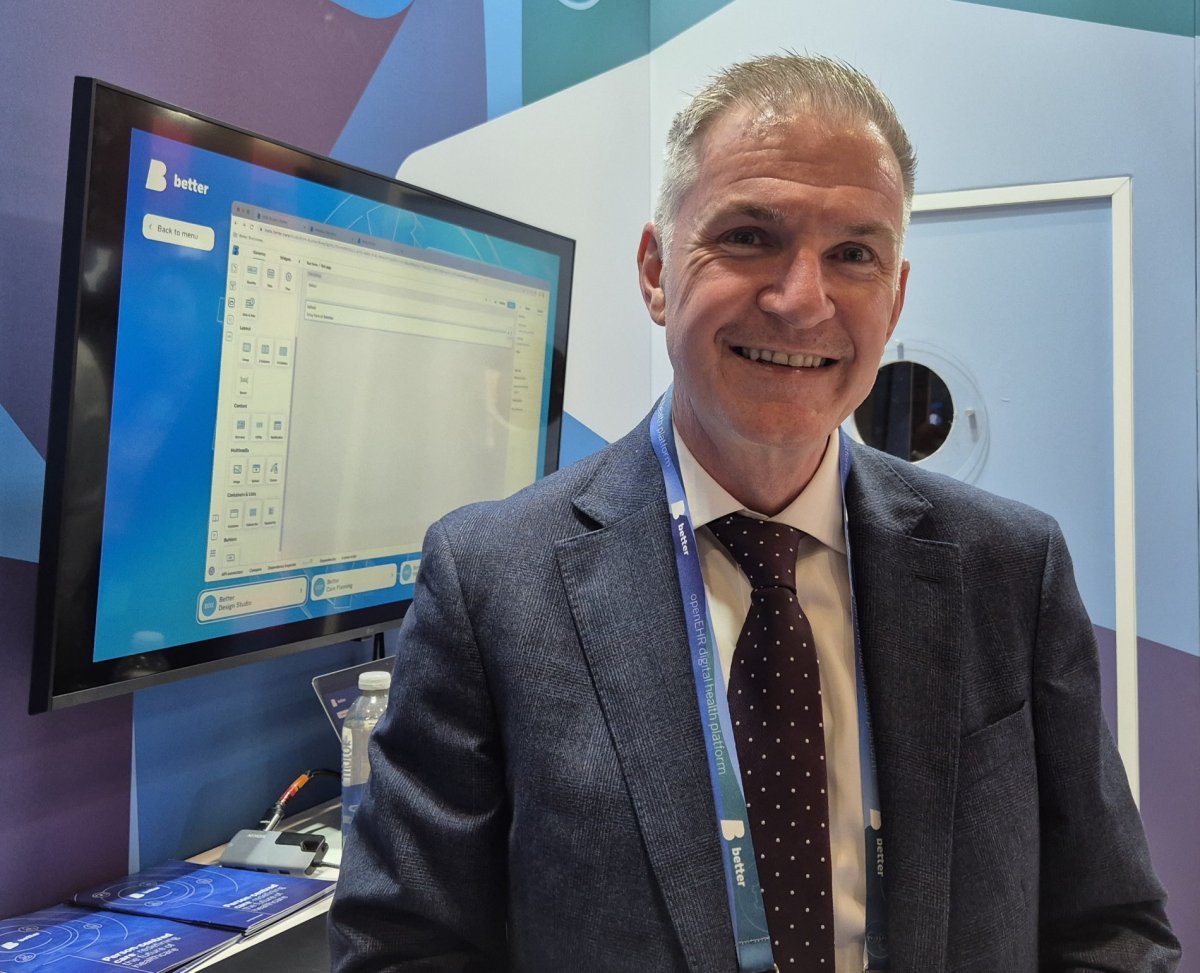
Image source: Better
The idea at the heart of the SPR is straightforward: a single, lifelong digital record that brings together a patient's test results, medication, allergies and care events in one place – accessible to every clinician involved in their care. Murray, UK & Ireland Sales Director at Better, a Slovenian company specialising in open data platforms for healthcare, illustrated the stakes with a vivid scenario: a 56-year-old man presents to his GP with shortness of breath and subsequently sees multiple healthcare professionals. Without a single patient record, information 'remains in silos, gets lost, or diluted.' With the SPR in place, every clinician sees 'the same complete up-to-date picture of his health.'
Greece: digital transformation at pace
Greece has built a national electronic health record for 10.5 million citizens, covering 207 hospitals and 3,000 GPs, with the system going live at the end of 2024. 'When we talk about digital transformation at pace, Greece has really embodied this,' Murray said. Built on the Better platform using cloud-native architecture in Microsoft Azure, all clinical data – medication, lab results, allergies, radiology and care events – is managed centrally. The system is based on openEHR and FHIR standards, with Greece adding its own applications and patient and clinical portals on top.
Slovenia and Malta: small nations, big ambitions
Slovenia's SPR, serving a population of two million, covers two university medical centres, 27 hospitals and 90 primary care centres. 'Slovenia created a national patient-centric architecture that has evolved from a document store into an e-health backbone with full digital capabilities,' Murray told delegates. The centralised repository manages structured and unstructured data, encompassing shared care records, e-referrals, e-prescribing, e-vaccination, patient summaries and a patient portal. Low-code development tools facilitate rapid deployment, and Murray highlighted an impressive metric: 'There is an 85-15 split of structured versus unstructured data and 98% of all health data is stored in the platform, so the platform truly is the one source for all health and care in Slovenia.'
Malta, with a population of 500,000, has implemented a centralised document repository that provides data as a service by separating the data from the application.
Ireland and the NHS: rolling out at scale
Ireland is rolling out a national shared care record for 3.5 million citizens, covering 2,500 GPs, 50 hospitals and more than 150 primary care centres. 'Their phased approach is rolling out over the next 36 months across seven regional health areas using a unified data layer with openEHR and FHIR which manages that interoperability and clinical governance,' Murray explained. The system integrates over 20 data sources – GP systems, hospitals and labs – all accessible through clinical and citizen portals.
You can only truly put the patient in the centre when you put the data in the centre
Brian Murray
'We are beginning a process of knowledge transfer so that the healthcare system can take advantage of the low-code development tools and begin their own journey for digital transformation and long-term sustainability.'
Within the UK, OneLondon's Universal Care Plan covers 10 million people across five integrated care systems and aligns with the NHS 10-year plan, which emphasises the need for a digital and data driven NHS. 'In London we have built a platform that offers single sign-on from existing systems that is standalone via the Better portal and works alongside the existing IT systems,' Murray said. The plan already includes care planning for end-of-life, frailty, dementia, learning disability and sickle cell care. 'It is designed around the patient rather than organisational boundaries,' he continued. 'The emphasis is interoperability and data sharing.'
A common thread across all these implementations is the separation of data from applications. 'You can only truly put the patient in the centre when you put the data in the centre,' Murray said, urging healthcare systems across Europe to learn from one another. His closing message was unequivocal: 'It is about creating data for life, data that persists regardless of which application you are using today; data for the life of the patient, not the life of your IT contract.'
Profile:
Brian Murray is the UK & Ireland Sales Director at Better, a provider of open data platforms for healthcare, based in Slowenia. With over 15 years of experience delivering digital health solutions, he is passionate about transforming health and care systems with modern, open, and interoperable technologies and works with NHS organisations and international partners to support digital strategies. His focus areas include interoperability, low-code development platforms, and clinical data repositories.
31.10.2026