


A new technology upgrades dedicated ICU workstations

Developed in collaboration with international clinicians, Orchestra workstations feature state-of-the-art infusion systems.
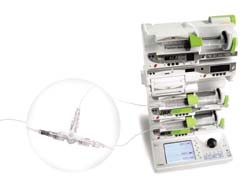
The unique Channel Relay enhances haemodynamic stability in ICU patients

‘Years of clinical use have proven their unique and smart functionalities, which are continually upgraded with new technologies,’ France-based Fresenius Kabi* reports. ‘Recently, the embedded dose-error reduction software has been updated. The customisable drug library, for up to 150 drugs, ensures safe pump programming that prevents over or under dosage.’
Functions include:
• Channel Relay – this links two syringes that automatically provide an uninterrupted and constant flow rate. Blood pressure is therefore better controlled and haemodynamic stability in ICU patients is enhanced.
• The Occlusivity Check System (OCS) – to prevent any risk of free-flow, this patented auto-test checks the correct working order of the infusion pump in association with its tubing set.

20.11.2008

More on the subject:

Related articles

Photo

News • Universal definition published

Beyond heart attack: cardiologists redefine myocardial infarction

When a myocardial infarction occurs, being able to classify its type can improve diagnosis and treatment. Now, a universal definition has been developed and published by four major cardiac societies.

Photo

News • Effects of temperature extremes

How cold spells and heat waves put the heart at risk

Temperature extremes can increase the risk of heart failure hospitalization, a new study finds. This underscores the need for health systems to respond to and prepare for environmental stressors.

Photo

News • Transesophageal echocardiography

Real-time imaging turns CPR into precision procedure

Researchers conducted the first randomized trial of transesophageal echocardiography (TEE)-guided CPR, showing improved blood flow indicators during resuscitation of cardiac arrest patients.

Subscribe to Newsletter