

© Schneider Digital
News • Stereoscopic viewing and virtual work
Passive 3D stereo monitors in medical applications
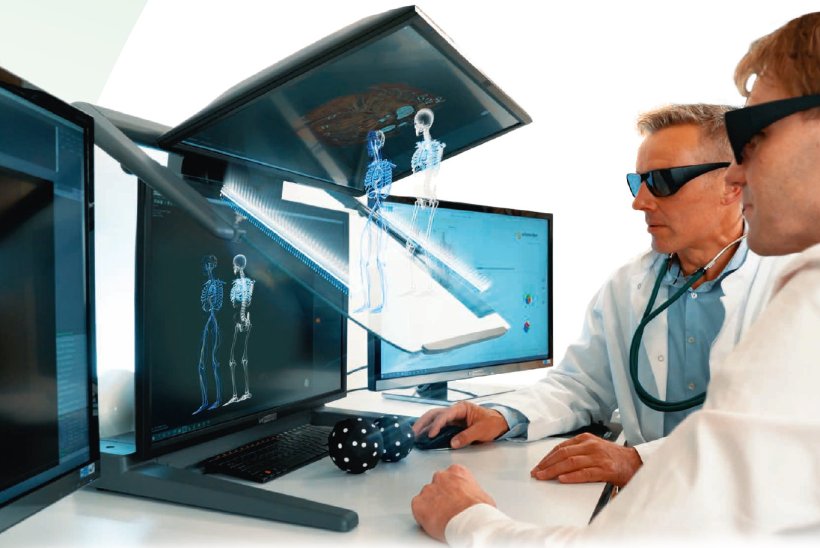
Volumetric 3D images and 3D models are becoming increasingly important in medical technology. Schneider Digital's high-resolution 3D PluraView stereo monitors are a perfect fit for 3D stereo display of medical data, especially from CT and MRI scanners.
The 3D PluraView monitor is compatible with all leading 3D-enabled medical software applications, such as Siemens Syngo, Brainlab Stereotaxy, Vertual Vert, Forsina, Vived Anatomy, Vesalius 3D, Paskal 3D, ThermoFisher Amira or 3D Slicer.
Compared to other 2D and 3D monitors, PluraView systems have two screens with passive 'BeamSplitter' technology that provide a realistic 3D experience, but with brightness suitable for daylight. Combined with the appropriate medical software and a powerful graphics card, they provide turnkey 3D workstation solutions that analyze and present volumetric medical data comfortably and efficiently – in the highest resolution, flicker-free, even in normal, bright workstation environments.
Areas of use and application:
- Surgery planning and preparation
- 3D computed tomography (CT)
- 3D imaging (MRI, ultrasound)
- Preparation for medical 3D printing
- Evaluation of visual medical data
- Education & Training
Source: Schneider Digital
16.11.2022