


Image source: NUS Medicine
News • Plasmid-specific ecological adaptation
How antimicrobial resistance spreads from gut bacteria to hospital superbugs
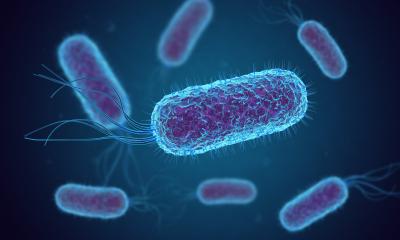
Study shows how conjugative plasmids can drive the global spread of antimicrobial resistance (AMR) in Enterobacterales such as Klebsiella pneumoniae or Escherichia coli.
Researchers from the Yong Loo Lin School of Medicine, National University of Singapore (NUS Medicine), have uncovered how a high-risk class of genetic vectors can efficiently spread antibiotic resistance within the gut, enabling even highly virulent bacteria to acquire drug resistance under real-world conditions. The findings shed new light on how so-called “superbugs”, bacteria that are both highly virulent and antibiotic-resistant, can emerge and persist, particularly in healthcare settings.
Antimicrobial resistance (AMR) is a growing global health threat, driving increased patient mortality, prolonged hospital stays, and rising healthcare costs. Of particular concern is the increasing number of reports, especially across Asia, of hypervirulent bacteria gaining resistance to last-line antibiotics, creating infections that are both difficult to treat and more likely to cause severe disease.
These gut-adapted plasmids represent a hidden but serious risk for the emergence of hard-to-treat infections
Gan Yunn Hwen
Led by Associate Professor Gan Yunn Hwen, Department of Biochemistry, and Co-Chair of the Infectious Diseases Translational Research Programme (TRP), NUS Medicine, the study, which was published in Nature Communications, investigated how AMR genes are transmitted in the gut, which could be a major reservoir of resistance genes due to the vast number of bacteria living there. Using laboratory models which mimic conditions in the human intestine, the team examined how plasmids—mobile DNA molecules that act as vehicles for AMR transmission—move between common gut bacteria such as Escherichia coli (E. coli) and hypervirulent Klebsiella pneumoniae (hvKp), a pathogen responsible for severe infections worldwide.
The team discovered that a distinct group of plasmids, known as PTU-P2 plasmids, are particularly well adapted to the oxygen-poor (anaerobic) environment of the gut. These plasmids transferred resistance genes far more efficiently than closely related plasmids under gut-like conditions, mirroring their much higher prevalence in human and clinical bacterial isolates worldwide. Crucially, once these plasmids entered a new bacterial host, they could continue spreading even when the original donor bacteria were no longer present, allowing resistance to persist and amplify within the gut microbial community.
Recommended article

Article • Bacterial defense mechanism
Antibiotic resistance: a global threat to healthcare
Antimicrobial resistance (AMR) is becoming more prevalent around the world, constituting a serious threat to public health. When bacteria acquire resistance against antibiotics, common medical procedures – for example, in surgery – become impossible due to the high infection risk. Keep reading to find out about AMR research, development of new antibiotics and antibiotic alternatives.
“Our findings show that not all resistance plasmids, even when they belong to the same category, behave the same way,” said Assoc Prof Gan. “Some plasmids are evolutionarily adapted to the mammalian gut, where they can quietly and efficiently spread antibiotic resistance. These gut-adapted plasmids represent a hidden but serious risk for the emergence of hard-to-treat infections.”
HvKp is known for its thick, sticky capsule, long thought to act as a physical barrier against genetic exchange. However, the study revealed that this capsule offers far less protection in the gut than previously assumed. Under oxygen-poor conditions similar to those in the intestine, the capsule became less viscous, allowing resistance plasmids to transfer more easily, which is a contrast to results seen under standard oxygen-rich laboratory conditions.
“In the lab, hvKp often appears relatively resistant to plasmid transfer,” explained Dr Melvin Yong, first author of the study, and research fellow at the Infectious Diseases TRP. “But in the intestine, where oxygen levels are very low, that barrier is weakened and makes it much easier for bacteria to pass genetic material to one another. This helps explain why we increasingly see hypervirulent strains acquiring antibiotic resistance in hospitals around the world.”
The study also showed that secondary transfer, where bacteria that have already acquired a plasmid go on to pass it to others, plays a dominant role in sustaining resistance spread in the gut. This means that even brief or rare exposure to resistant bacteria can seed long-lasting AMR transmission. By combining experimental work with large-scale genomic analysis of millions of bacterial genomes worldwide, the team showed that PTU-P2 plasmids are far more common in human-associated bacteria than their environmental counterparts. This suggests that current AMR surveillance efforts, which often focus on resistance genes alone, may miss high-risk plasmid backbones before they become widespread. The findings underscore the importance of studying AMR in biologically relevant environments and caution against relying solely on laboratory experiments to predict real-world risk.
Building on this work, the researchers aim to identify strategies to block plasmid transmission in the gut and improve early detection of high-risk AMR vectors in clinical settings. These efforts will be supported through the establishment of the Centre for AMR Microbiome Research & Innovations (CAMBRI) at NUS Medicine, which will focus on understanding how complex gut microbiomes, both the healthy and antibiotic-perturbed ones, shape the spread of antimicrobial resistance.
Source: National University of Singapore, Yong Loo Lin School of Medicine
28.01.2026