News • Unexpected weight loss
Blood test trends may help identify increased risk of cancer
Among patients with unexplained weight loss, changes over time in routine blood test results were associated with overall and site-specific cancer diagnoses

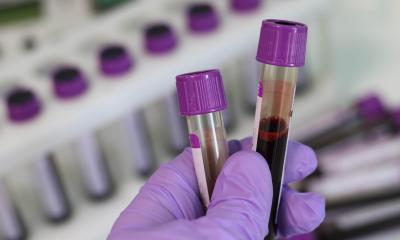
© Akram Huseyn – unsplash.com
Blood test trends alongside unexplained weight loss can improve triage for cancer testing, according to a study by Brian Nicholson and colleagues from the University of Oxford, UK, published in the open access journal PLOS Medicine.
Abnormal blood test results, such as low hemoglobin or increased platelet counts, can provide clues about a patient’s risk of developing cancer. However, monitoring trends over repeat tests could provide further clues in some instances, by identifying cancer-related changes in blood test results that do not appear abnormal. Assessing patterns in blood test abnormalities and trends alongside unexplained weight loss could enhance cancer risk assessment and support earlier diagnosis.
In this study, researchers examined trends in blood test results among patients with unexplained weight loss, a common non-specific symptom associated with multiple cancer types. The goal was to determine whether trends in 26 commonly used blood tests in primary care could improve cancer risk stratification compared to abnormalities on single blood tests.
We plan to assess how well blood test abnormalities and trends inform cancer risk in patients with other types of non-specific symptoms, such as fatigue and vomiting
Pradeep Virdee
Among the more than 275,000 patients included in the study, nearly 14,000 were subsequently diagnosed with cancer within six months, allowing researchers to relate abnormalities on single tests and trends over repeat blood tests to cancer diagnosis. Overall, 23 blood test trends were associated with overall cancer risk. Several abnormalities were also associated with specific cancer types. After accounting for age and sex, several blood test trends were more discriminative for cancer diagnosis than individual abnormal test results. For example, trends in white blood count and neutrophils were linked to lung cancer while trends in red blood cell count, hematocrit, and platelet-to-lymphocyte ratio were associated with prostate cancer.
The findings suggest that monitoring changes in routine blood test results in patients with unexplained weight loss could identify patients in primary care who would benefit from additional cancer testing.
Author Brian Nicholson adds, “We show how blood test results are made more accurate for cancer by adding patient age and sex. This relatively simple calculation could easily be performed at the laboratory.”
Author Pradeep Virdee states, “In some instances, monitoring how a patient's blood test results change over time could offer further value. We plan to assess how well blood test abnormalities and trends inform cancer risk in patients with other types of non-specific symptoms, such as fatigue and vomiting.”
Source: PLOS
18.09.2026