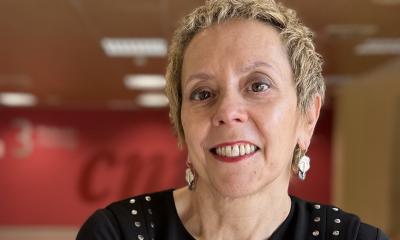


Prof. Johanna Joyce
Advancing cancer research across Europe and beyond
Ludwig Cancer Research congratulates Ludwig Lausanne's Johanna Joyce, who has now begun her two-year term as President of the European Association for Cancer Research (EACR), a global community of scientists and clinicians dedicated to advancing the scientific understanding of cancer and its application to improve patient care.

Image source: Timenow-2024, Johanna Joyce, (CC0 1.0)
A leading tumor immunologist whose research has helped define the field, Joyce has made landmark contributions to the scientific understanding of how the diverse immune landscapes of tumor microenvironments influence cancer growth, metastasis, therapeutic resistance and recurrence. She is perhaps best known as an authority on the multiple roles that myeloid immune cells - such as macrophages and neutrophils - play in primary and metastatic brain tumors, and for laying the groundwork for the development of new strategies to treat these typically incurable malignancies.
To help lower barriers to entry and accelerate discovery in the field, Joyce has also freely shared groundbreaking datasets, analytical tools and protocols developed in her laboratory to explore the biogeography of tumor microenvironments and their remodeling in response to therapy.
Such scientific leadership is, however, just one part of what Joyce brings to the EACR presidency, where she will be charged with strategic oversight of the Association. Aside from promoting broad scientific collaboration, dialogue and training, the EACR President leads organizational efforts to support early-career scientists, advocate for the field and foster an inclusive international community of cancer researchers.
Joyce is especially well suited to this role, having long led efforts to address issues of importance to both scientists and the scientific enterprise. She has examined why the gender gap widens at senior levels of the academic research ladder, proposing strategies to remedy this disparity and, more generally, retain early-career scientists in academia. She has also contributed substantially to the dialogue on the growing global burden of cancer, identifying seven policy priorities that could improve Europe’s response to this urgent challenge, including support for basic research and biotech startups as well as investment in education and cancer prevention.
Her leadership is widely expected to strengthen the EACR and advance its mission to support cancer research across Europe and beyond.
Source: Ludwig Institute for Cancer Research
15.06.2026