

News • BAC as predictor of cardiovascular disease
Mammograms can detect more than breast cancer, study finds
In a new study, researchers with University of California San Diego School of Medicine have found that mammograms could be used as a predictor of cardiovascular disease in women.

Image credit: UC San Diego Health
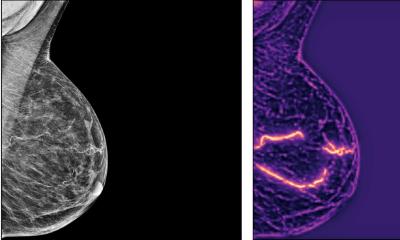
The retrospective study, now published in JACC: Advances, reviewed nearly 20,000 anonymized mammograms to measure the amount of breast arterial calcification (BAC), or calcium build up in the arteries of the breast, which has been historically viewed as an incidental finding on mammograms.
The results were then quantified by using an artificial intelligence-generated score and found that BAC was present in 23% of the cases. BAC is especially predictive of future cardiovascular events among younger women. According to lead study author Lori Daniels, MD, cardiologist at UC San Diego Health, BAC is not yet an established cardiac risk factor, but she’s hopeful this research could help implement measurement of BAC into clinical practice in the near future.
Source: University of California - San Diego
30.09.2024